
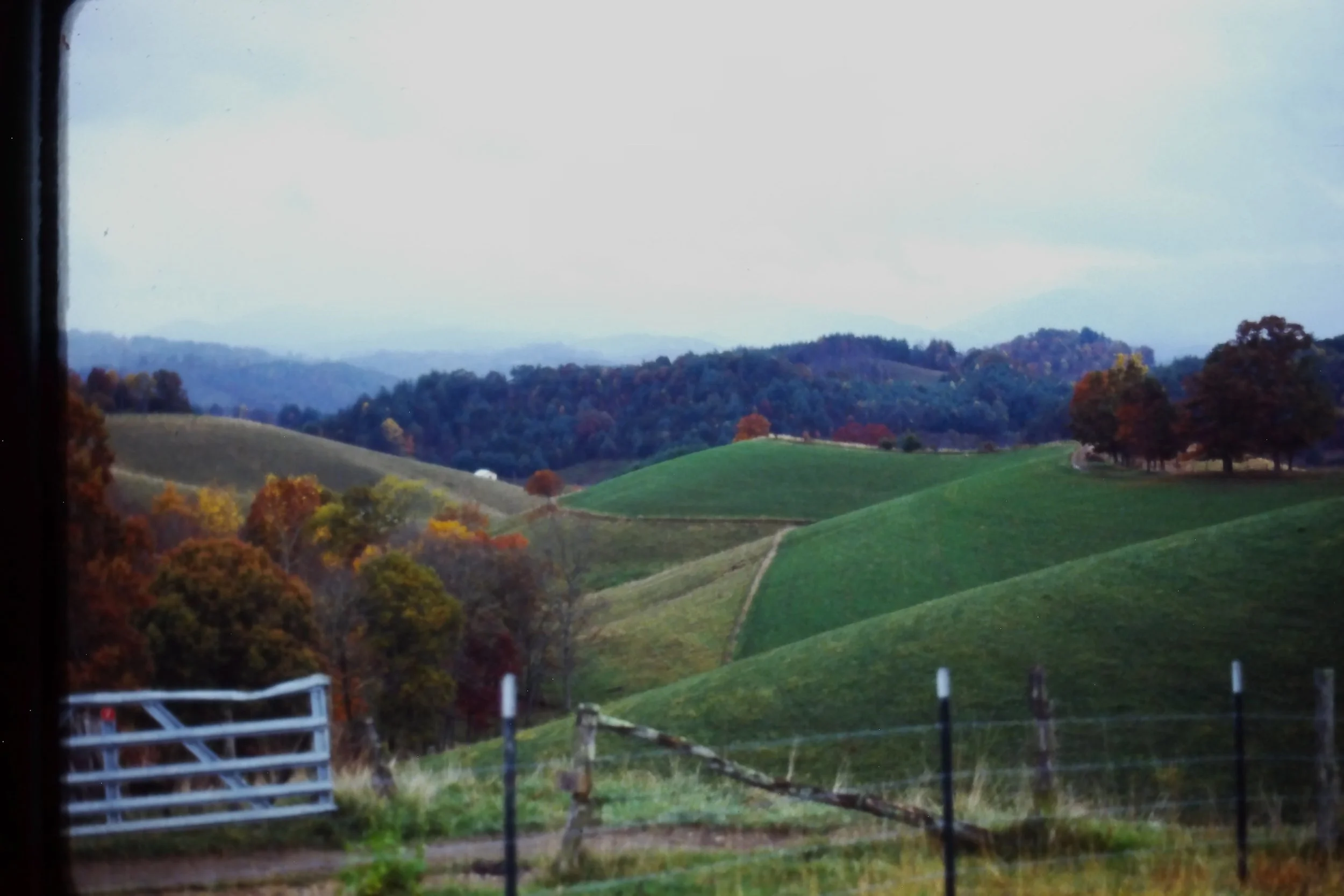
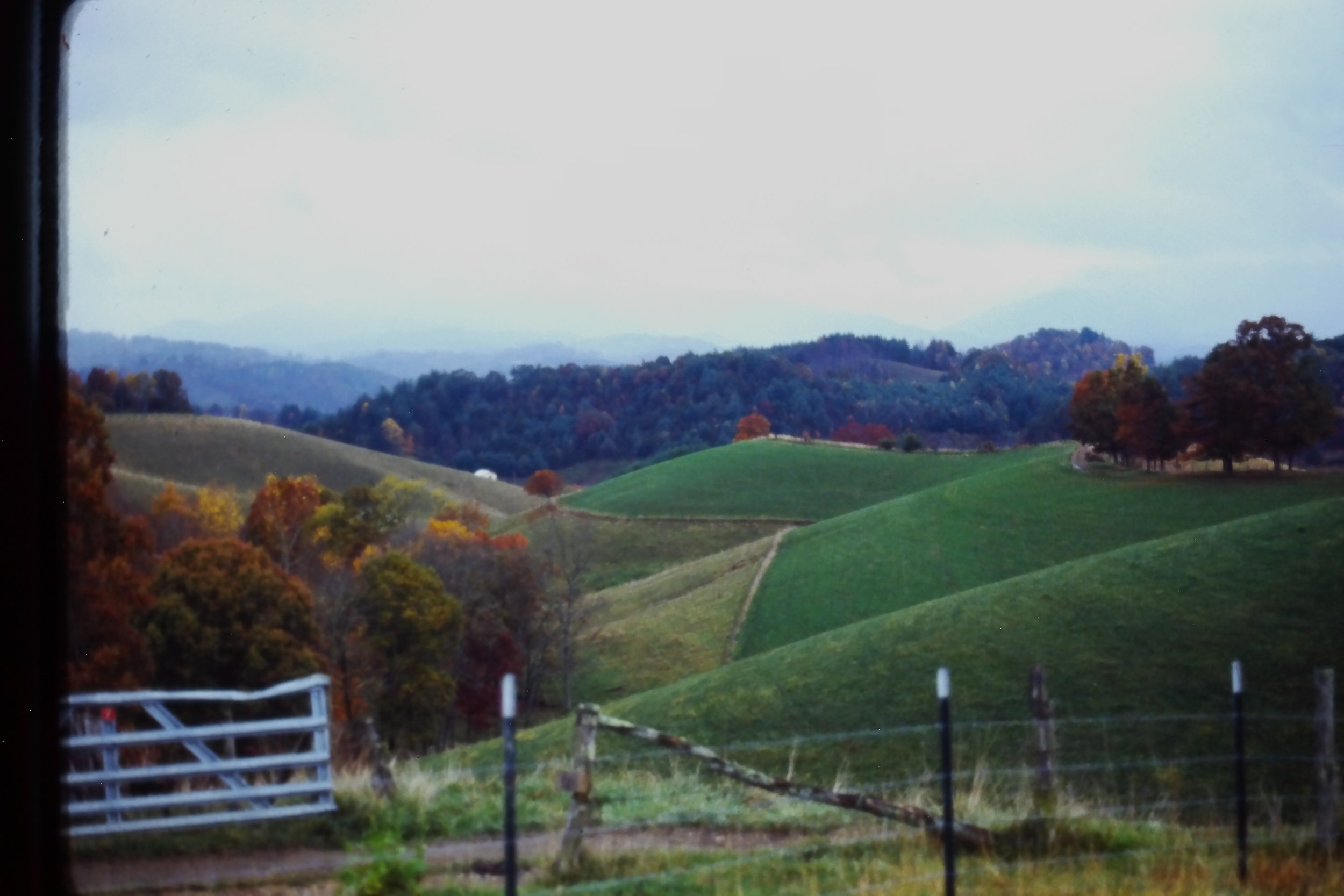
Photo taken on a Madison County farm in 1980.
As development pressures continue to grow across Western North Carolina, so does the importance of preserving the farms and forests that have long defined the region’s landscape, economy, and heritage.
Farmland preservation is about far more than protecting open space. Agricultural and forest lands provide critical benefits that support food security, environmental sustainability, economic stability, and the character of rural communities. Healthy farmland filters water, supports wildlife habitat, stores carbon, and helps reduce the impacts of flooding and other natural disasters. Once productive farmland is converted to development, many of these benefits can be difficult, if not impossible, to restore.
Agriculture remains an important economic driver in Madison County. Farms support local jobs, family businesses, and related industries while helping maintain the scenic rural landscapes that attract residents and visitors alike. Preserved farmland also contributes to outdoor recreation opportunities, including hunting, fishing, hiking, and horseback riding, while reinforcing the county’s cultural identity and agricultural traditions.
Supporting Madison County Farms
To support these goals, Madison County Soil & Water continues to encourage participation in its Farmland Preservation Program through the county’s Voluntary Agricultural District program. The initiative currently includes approximately 40 participating farmers and seeks to expand membership among eligible landowners.
Participation is voluntary and may be canceled at any time. The program is designed to strengthen the agricultural community, support farming livelihoods, and reduce the likelihood of conflicts between farmers and neighboring property owners when farms are operated according to accepted agricultural practices.
Landowners interested in joining must own qualifying agricultural property used for crop production, livestock operations, or agritourism activities. Participants must demonstrate adequate soil erosion management and agree to maintain the property in agricultural use for 10 years, although the agreement is nonbinding and landowners may withdraw from the program at any time. Final approval is granted by the Agricultural Advisory Board.
Conservation Easements Offer Permanent Protection
While voluntary agricultural districts can help support working farms, conservation easements offer another tool for landowners who want to permanently limit future development.
Conservation easements can protect farmland and natural resources while allowing landowners to retain ownership of their property. However, significant financial and administrative obstacles currently limit their use in Madison County.
Historically, demand for conservation easement funding through the North Carolina Agricultural Development and Farmland Preservation Trust Fund has outpaced available resources. In 2025, more than $55 million in easement requests were submitted statewide, but only about $6 million was available to meet that demand. Although the funding gap recently narrowed with increased state support, total funding for farmland preservation in this year’s State budget reached $48.9 million.
The cost of establishing and maintaining conservation easements also presents challenges. Transaction costs can exceed $50,000 per project, while successful programs typically require stewardship endowments, matching funds, and dedicated staff to manage long-term monitoring obligations.
Properties seeking conservation easements are generally evaluated using criteria such as proximity to national forest lands, visibility from the Appalachian Trail, frontage along the French Broad River, the presence of prime agricultural soils, wildlife habitat value, and other conservation characteristics. Compensation for development rights typically ranges from 35% to 75% of appraised value, depending on a property’s conservation significance.
Creating a local land trust capable of administering conservation easements requires years of planning, substantial financial commitments, and extensive administrative infrastructure. At present, Madison County recommends that landowners interested in pursuing conservation easements work with established organizations already serving the region, including Southern Appalachian Highlands Conservancy and Working Lands Trust.
A Madison County Farmer's Story
For Madison County farmer Tex Teixeira, the decision to place a conservation easement on his Nowhere Branch Farm was about more than preserving a piece of property. It was about making sure the land would remain a farm long after he was gone.
“I would like to go to the grave knowing that I've left this Nowhere Branch Farm in much better shape than I found it,” Teixeira said. “But it always bothered me that some future developer could buy this and turn it into a subdivision or trailer park. I see it going on all around me.”
Teixeira said the conservation easement provided a way to protect the farm’s future while allowing his family to retain ownership and make decisions about how the property is used.
“By donating an agricultural conservation easement to Working Lands Trust, that gives me further satisfaction to know that the future use of this land will be protected from development in perpetuity,” he said.
The easement does not require the family to give up ownership of the farm. Instead, it limits future development rights while allowing the property to remain in private ownership. Teixeira said his family retains the ability to determine where homes and farm structures can be located, and the property can still be held or sold.
The conservation agreement also provides a mechanism for ensuring those protections remain in place as ownership changes.
“Future owners will be obligated to abide by our wishes,” Teixeira said. “The Working Lands Trust will insure this through annual inspections.”
For Teixeira, the process also became more accessible because Working Lands Trust helped prepare and submit the application for state funding to cover expenses associated with the easement.
“They even prepared and submitted the application for me to receive State funding to pay for the surveys, appraisals and legal work to make this happen,” he said.
With state funding for his project approved, Teixeira said the decision ultimately gave him a sense of responsibility fulfilled — not only to his family, but to the land itself.
“My time on this earth is limited but I feel like I owe it to the land and all the wild creatures that live here to preserve this Madison County farm.”
Teixeira’s experience illustrates one of the central benefits of conservation easements: landowners can continue to own and use their property while permanently limiting its future development potential.
For Madison County, those individual decisions can add up to something much larger — protecting the working farms, forests, wildlife habitat, and rural landscapes that help define the county.
For more information, contact the Madison County Soil & Water office at (828) 649-9099, ext. 3, or email jhocz@madisoncountync.gov.